
Managing dirty laundry in high-occupancy buildings like hotels and hospitals is a major operational bottleneck. Studies show that housekeeping labour accounts for up to 40% of total hotel operating expenses, with workers spending hours moving heavy laundry carts through guest elevators and hallways.
This manual process slows down room turnaround times, causes foot traffic congestion, and increases overheads. Implementing a dedicated linen chute system eliminates these delays by instantly transporting soiled linens from upper floors directly to the laundry room.
What Is a Linen Chute? And Why Does Your Facility Need One?
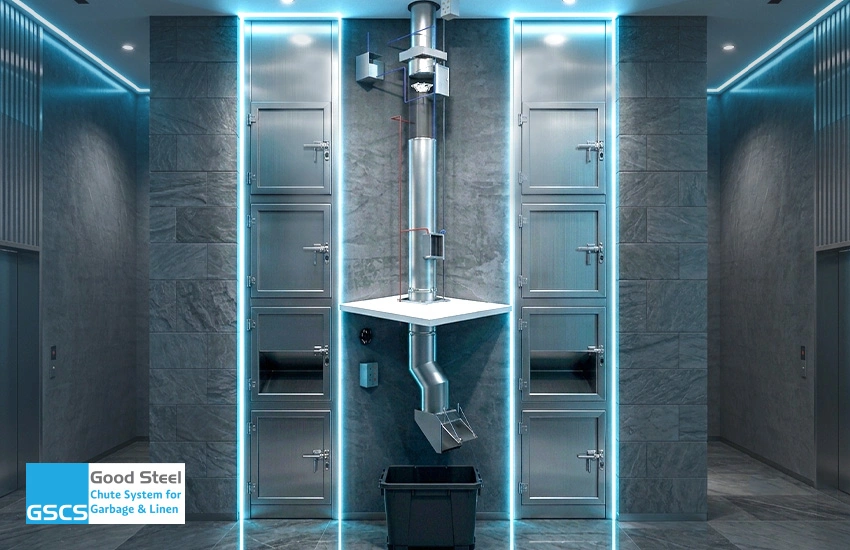
A linen chute is a vertical stainless-steel shaft that uses gravity to instantly transport soiled laundry from upper floors directly to a centralised collection room.
Upgrading to this automated system eliminates the manual hauling of heavy bags through service lifts, delivering immediate improvements across daily operations:
- Lower Labor Costs: Housekeeping staff no longer waste hours transporting bags across floors, allowing them to focus entirely on room preparation and guest satisfaction.
- Faster Room Turnaround: Dirty sheets and towels disappear from guest floors instantly, keeping hallways clear and speeding up the room cleaning cycle.
- Zero Elevator Bottlenecks: Removing bulky laundry carts from service elevators frees up vertical transport for guests, maintenance, and room service.
Global hospitality leaders, including Crowne Plaza Hotels & Resorts, rely on these automated systems to maintain seamless, high-speed operations without disrupting the guest experience.
Contact our engineering team today to design a system tailored to your building’s layout.
Linen Chute System: Overcoming Hygiene Risks
Manual laundry transport poses severe health and safety risks, particularly in healthcare environments. Dragging soiled linens through public corridors spreads airborne bacteria, cross-contaminates clean zones, and compromises facility hygiene. In hospitals and medical centres, preventing the spread of healthcare-associated infections (HAIs) is a top priority.
A specialised linen chute system solves this problem by enclosing the entire disposal process within a sealed, negative-pressure vertical shaft.
- Complete Isolation: Side-intake doors remain tightly sealed, preventing foul odors and contaminated air from escaping back into guest or patient floors.
- Advanced Sanitation: Integrated top sanitising units automatically wash and disinfect the inner stainless steel tube, eliminating bacterial growth before it starts.
- Cross-Contamination Prevention: Soiled materials go straight from the floor intake to the collection room without ever entering public spaces, securing a sterile environment.
This setup allows facility managers to meet strict medical hygiene protocols while significantly reducing daily operational friction.
Get a direct quote for your project and optimise your building’s workflow now.
Core Technical Features of Linen Chutes
High-performance, heavy-duty systems rely on premium materials and automated safety mechanisms to protect the building’s infrastructure. When evaluating your design, the following engineering standards are essential:
- Heavy-Gauge Stainless Steel: The vertical tube chassis must be built using 304 Stainless Steel with a thickness of 1mm to 1.5mm to ensure high impact resistance and prevent rust from damp linens.
- NFPA Fire Containment: Intake doors must be strictly fire-rated, featuring fusible link fire sprinklers and automated guillotine cut-off doors to completely isolate the shaft during emergencies.
- Smart Safety Interlocks: Modern systems integrate with the Building Management System (BMS), utilising electronic control panels that automatically lock all intake doors during fire or smoke alarms.
Speak with an expert engineer to review your building’s technical specifications.
Choosing the Right Linen Chute Manufacturer
Selecting an experienced local linen chute manufacturer is critical for long-term operational success. Relying on imported systems often leads to severe project delays, high shipping costs, and prolonged building downtime when replacement parts are unavailable in the local market.
Partnering with a specialised local manufacturer gives developers a clear competitive edge:
- 100% Local Manufacturing: Choosing a partner with local production facilities guarantees full control over material quality, rapid delivery times, and perfect customisation for your specific architectural layouts.
- Direct Factory Maintenance: A dedicated, factory-trained technical support team ensures faster response times for routine inspections and urgent emergency repairs compared to third-party contractors.
- Universal Service Capabilities: Top-tier specialised manufacturers do not just service their own products; they possess the technical expertise to maintain, upgrade, and repair existing systems built by other brands.
Major regional developers like Emaar Misr, Orascom Construction, and Sodic consistently trust specialised local engineering to deliver certified, durable systems for their high-profile commercial and residential projects.
Request a commercial proposal of good steel today to integrate local, high-performance systems into your next project.